
Join Our Team
Apply today
Lead Commissioning Engineer
ABOUT THE OPPORTUNITY
This is more than a job — it's a chance to get in on the ground floor in an ever expanding and growing service based industry. Based out of our headquarters in South Portland Maine, we're a startup operating at the intersection of clean energy and technical excellence. The utility-scale solar industry is expanding at a pace few sectors can match, and our commissioning team is at the tip of the spear: the people who flip the switch, bring projects online, and make clean energy real. We're building a team of sharp, driven engineers and Junior Engineers who want to grow alongside a company — not just fill a seat. If you're energized by complex technical challenges, thrive in the field, and want your work to matter, we want to hear from you.
POSITION OVERVIEW
The Lead Commissioning Engineer serves as the senior technical authority on-site, responsible for the end-to-end execution of commissioning programs at community to utility-scale solar PV projects. This role develops detailed testing and commissioning proposals derived directly from engineered IFC drawings and project design documents, builds out detailed internal test plans that exceed the expectations of our clients, leads and develops a team of junior engineers and field technicians, and ensures all electrical and mechanical systems are installed, tested, and verified in accordance with project specifications, applicable utility electrical codes, and manufacturer requirements prior to energization and commercial operation.
In addition to testing & commissioning services, the Lead Engineer will also support our expanding O&M services — including building O&M proposals based on IFC sets and system design, troubleshooting and assisting in maintenance recommendations & solutions when systems are down, and overseeing yearly inspections and add-on services for our clients.
KEY RESPONSIBILITIES
Lead and coordinate all commissioning activities for utility-scale solar PV projects, including inverters, trackers, SCADA/DAS, met stations, and interconnection equipment.
Develop testing and commissioning proposals by interpreting engineered drawings (single-line diagrams, protection coordination studies, equipment schedules, site plans, and interconnection drawings), translating design intent into detailed test plans, procedures, and acceptance checklists.
Perform and oversee functional testing of AC/DC electrical systems, protection relays, inverters, step-up transformers, and medium-voltage switchgear.
Coordinate with EPC contractors, OEM representatives, the utility, and the Owner's Engineer to resolve punch list items and technical issues.
Ensure compliance with NFPA 70E electrical safety requirements, site safety plans, and OSHA regulations during all commissioning activities.
Document test results, prepare commissioning reports, and maintain accurate records of as-built conditions and equipment settings.
Support energization procedures and utility witness testing, serving as the technical point of contact during grid interconnection.
Identify and communicate project risks, schedule impacts, and technical deficiencies to the Project Manager.
Provide technical oversight and mentorship to field commissioning technicians.
This role is approximately 50–75% field-based with regular travel across our operating markets: ME, NH, MA, NY, PA, DE, VA, IL, TX.
TESTING RESPONSIBILITIES — PHASE 1: PRE-ENERGIZATION
Grid Emulation Testing — Simulate utility-grid conditions to confirm inverters, switchgear, and protection equipment respond correctly before grid connection.
DAS Pre-Qualification — Verify all Data Acquisition System devices, sensors, and communication pathways meet configuration and performance requirements.
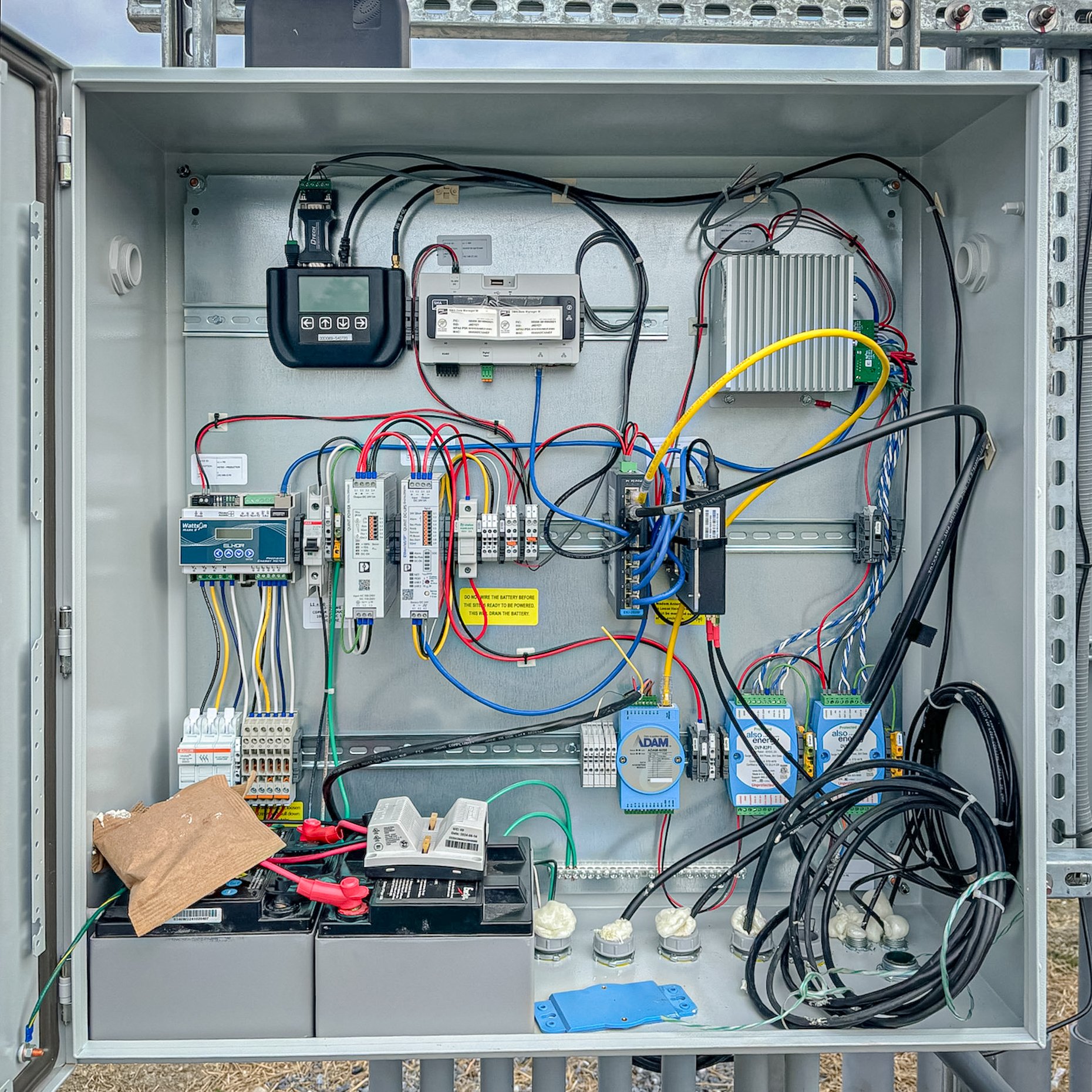
DAS Remote Commissioning — Complete final setup, configuration, and functionality checks of the DAS system, ensuring live site data is accessible and reporting correctly.
Insulation Resistance Testing — Measure insulation quality on conductors, equipment, and circuits to ensure no unwanted leakage current or degradation.
IV Curve Testing — Capture current-voltage characteristics of PV strings and modules to verify performance, identify hidden defects, and confirm expected production values.
Open Circuit Voltage Testing — Measure string/module voltage with no load applied to confirm correct wiring, polarity, and module count.
Inverter Cold Commissioning — Perform all inverter checks, programming, and verifications before energization, including firmware, settings, communication, and safety interlocks.
Transformer Cold Commissioning — Inspect and verify transformer wiring, tap settings, grounding, oil levels (if applicable), and relay protections prior to energized testing.
Main Circuit Breaker Programming — Configure protection settings, time-current curves, trip levels, and communication parameters for the site main circuit breaker.
Switchboard Breaker Settings — Set and confirm individual breaker protection parameters (instantaneous, long-time, short-time, ground-fault) within switchboards and gear lineups.
Ground Grid Resistance Testing — Measure resistance of the site grounding system to confirm the ground grid is continuous, low-resistance, and code-compliant.
VLF Cable Testing — Conduct Very Low Frequency high-voltage testing to verify insulation integrity of medium-voltage cables after installation and before energization.
Surge Arrester Testing — Evaluate surge arresters for proper installation, grounding, and functionality to ensure safe diversion of transient overvoltages.
Air Switches Testing — Inspect and verify manual or motor-operated air disconnect switches for proper operation, alignment, contact engagement, and mechanical functionality.
CT & PT Testing — Test current and potential transformers for correct ratios, polarity, wiring, burden, and accuracy prior to energizing protection systems.
Recloser Relay Programming/Testing — Configure and validate recloser control settings including trip curves, reclosing sequences, and communications for proper fault isolation.
Meter Programming/Testing — Configure utility meters with correct parameters and verify accuracy, functionality, and data transmission.
Fiber Drop/Loss Testing — Measure signal loss and continuity in fiber-optic lines to confirm low attenuation and reliable communication between systems.
TESTING RESPONSIBILITIES — PHASE 2: POST-ENERGIZATION
Thermography Testing — Use infrared imaging to identify hotspots, loose terminations, overloaded conductors, or failing components in electrical equipment and PV strings.
Operating Current Testing — Measure actual running current of circuits, strings, and equipment under normal operating conditions to confirm expected performance and detect abnormal loads.
Capacity & Performance Testing — Verify that electrical and mechanical equipment can deliver rated load/output safely and consistently under controlled conditions.
Hot Commissioning — Perform energized tests including functional checks, protection testing, communication validation, and full operational verification after cold commissioning is complete.
Racking Commissioning — Inspect the mechanical racking system for compliance with engineering specifications including pile alignment, torque values, module mounting tolerances, and grounding continuity.
Also Energy Advanced Site Configuration — Complete and submit the site configuration form (combiner, inverter, weather station, expected losses, etc.) to the designated data configuration contact for upload into the project's PowerTrack profile.
QUALIFICATIONS
Bachelor's degree in Electrical Engineering, Power Systems, or related field (or equivalent technical experience).
3–7 years of proven experience in commissioning, testing, or startup of utility-scale solar PV or power generation projects.
Strong working knowledge of AC/DC electrical systems, inverter technology (central and string), SCADA systems, DAS and protection relaying.
Familiarity with NEC, IEEE 1547, IEC, and NERC interconnection standards applicable to utility-scale solar.
Experience with relay testing equipment (Doble, Omicron, or equivalent) and power quality analyzers.
NFPA 70E or equivalent electrical safety certification required; NABCEP certification a plus.
Ability to travel to project sites for extended periods (domestic).
NETA ETT certification (Level 3 or 4 preferred) or demonstrated commitment to pursue and lead Mission Controls NETA accreditation.
PE License required; Mission Control Energy will support and fund reciprocity licensure across operating states.
Strong communication and documentation skills; proficiency with MS Office, Google Drive, Procore.
Team player with a positive attitude and strong work ethic.
BENEFITS
Compensation commensurate with experience
Company Health & Dental Insurance
Professional development & continuing education budget
401k
PTO package
9 Paid Holidays
Junior Commissioning Engineer
ABOUT THE OPPORTUNITY
Looking to launch your engineering career in one of the fastest-growing sectors in the energy industry? This is your entry point. Based out of our Maine headquarters, we're a startup with big ambitions and a tight-knit team that believes in developing talent from the ground up. As a Junior Commissioning Engineer, you'll work shoulder-to-shoulder with our Lead Commissioning Engineer on real utility-scale solar projects — not running simulations or sitting in a classroom, but out in the field bringing clean energy infrastructure to life. We're growing fast, and the engineers who join us now will grow with us. If you're hungry to learn, unafraid to get your hands dirty, and excited by the idea of a career that leaves something behind on the landscape, we want to meet you.
POSITION OVERVIEW
The Junior Commissioning Engineer supports the Lead Commissioning Engineer in planning and executing testing and commissioning activities at utility-scale solar PV projects. This role develops hands-on experience interpreting engineered drawings and translating design documents into field test procedures, while performing and documenting a full range of pre- and post-energization tests under direct mentorship. It is an intentionally developmental role — structured to build the technical foundation for a long-term career in solar commissioning. In addition to the testing & commissioning services, the Junior Engineer will also support the expanding O&M services Mission Control offers. The responsibilities will include assisting in building O&M proposals based on IFC sets and system design, monitoring our clients' PowerTrack systems & communicating back to clients per our contractual agreements, troubleshooting and assisting in maintenance recommendations & solutions when systems are down, and overseeing yearly inspections and add-on services for our clients.
KEY RESPONSIBILITIES
Support the Lead Commissioning Engineer in developing testing and commissioning proposals by reading and interpreting engineered drawings, including single-line diagrams, protection coordination studies, equipment schedules, and site plans.
Assist in preparing commissioning plans, test procedures, and acceptance checklists derived from project design documents and manufacturer specifications.
Perform hands-on pre- and post-energization testing under the supervision of the Lead Commissioning Engineer, including DC/AC system testing, insulation resistance, IV curve tracing, and functional equipment verification.
Record field test data accurately using commissioning checklists, mobile applications, and project documentation platforms; flag discrepancies to the Lead Engineer promptly.
Conduct visual inspections of PV modules, racking, wiring, conduit, and BOS equipment for conformance with design drawings and installation standards.
Support inverter, transformer, and switchgear cold commissioning activities including equipment verification, setting checks, and pre-energization sign-off checklists.
Assist with coordination of punch list documentation, tracking open items, and communicating status to the Lead Commissioning Engineer.
Participate in site safety briefings, adhere to NFPA 70E electrical safety requirements and LOTO procedures, and support a strong safety culture on every project.
Contribute to post-commissioning reporting and lessons-learned documentation to support continuous improvement of team procedures.
Engage in ongoing professional development, including study toward relevant certifications and hands-on mentorship from senior team members.
This role spends about 50%–75% of the time in the field, and can expect regular travel to the various markets and states we operate in. (ME, NH, MA, NY, PA, DE, VA, IL)
TESTING RESPONSIBILITIES — PHASE 1: PRE-ENERGIZATION
Grid Emulation Testing — Assist in simulating utility-grid conditions to confirm inverters, switchgear, and protection equipment respond correctly before grid connection.
DAS Pre-Qualification — Support verification of DAS devices, sensors, and communication pathways against configuration and performance requirements.
DAS Remote Commissioning — Assist with final DAS setup, configuration, and functionality checks to ensure live site data is accessible and reporting correctly.
Insulation Resistance Testing — Perform megger testing on conductors, equipment, and circuits and document results against design thresholds.
IV Curve Testing — Operate I-V curve tracing equipment on PV strings and modules; document results and flag underperforming strings for review.
Open Circuit Voltage Testing — Measure and record string/module Voc, confirming correct wiring, polarity, and module count against engineered drawings.
Inverter Cold Commissioning — Assist with inverter pre-energization checks including firmware verification, settings confirmation, and communication testing.
Transformer Cold Commissioning — Support inspection and verification of transformer wiring, tap settings, grounding, and relay protections prior to energized testing.
Main Circuit Breaker & Switchboard Settings — Assist in confirming breaker protection parameters against the protection coordination study under Lead Engineer direction.
Ground Grid Resistance Testing — Support testing of the site grounding system and document results for compliance review.
VLF Cable Testing — Assist with Very Low Frequency high-voltage testing of medium-voltage cables and document pass/fail results.
Surge Arrester, Air Switches, CT & PT Testing — Perform inspections and basic functional checks under direct supervision; record all findings in commissioning documentation.
Recloser Relay & Meter Programming — Assist the Lead Engineer with configuration verification and functionality testing of protection relays and utility meters.
Fiber Drop/Loss Testing — Operate OTDR or light source/power meter equipment to verify fiber-optic link performance and document attenuation results.
TESTING RESPONSIBILITIES — PHASE 2: POST-ENERGIZATION
Thermography Testing — Operate thermal imaging cameras to scan electrical equipment and PV strings; flag hotspots and anomalies for Lead Engineer review.
Operating Current & Capacity Testing — Measure and record running currents and equipment output under operating conditions; compare against design values and document deviations.
Hot Commissioning — Assist with energized functional checks, protection testing, and communication validation under direct Lead Engineer supervision.
Racking Commissioning — Perform physical inspection of racking systems against engineering specifications; document torque values, alignment, and grounding continuity.
Also Energy Advanced Site Configuration — Assist in completing and submitting the site configuration form for upload into the project's PowerTrack profile.
QUALIFICATIONS
Bachelor's degree in Electrical Engineering, Power Systems, Electrical Technology, or related field (recent graduates encouraged to apply).
0–2 years of experience in electrical engineering, solar PV, or power generation; internship or co-op experience in a relevant field is a strong plus.
Basic familiarity with AC/DC electrical systems and the ability to read single-line diagrams and electrical schematics.
Eagerness to learn commissioning test procedures and develop hands-on proficiency with field test instruments.
OSHA 10 certification required (or willingness to obtain before first site deployment); NFPA 70E training strongly preferred.
Valid driver's license and willingness to travel to project sites for extended periods; per diem and travel expenses provided.
Strong attention to detail, curiosity, and a collaborative attitude — this role is built on learning.
Proficiency with MS Office; experience with commissioning or project management software a plus.
BENEFITS
Compensation commensurate with experience
Company Health & Dental Insurance
401k
PTO package
9 Paid Holidays