
TESTING
Prove It Before You Energize.
Independent electrical acceptance testing for renewable energy assets, performed to NETA standards, documented to lender expectations.
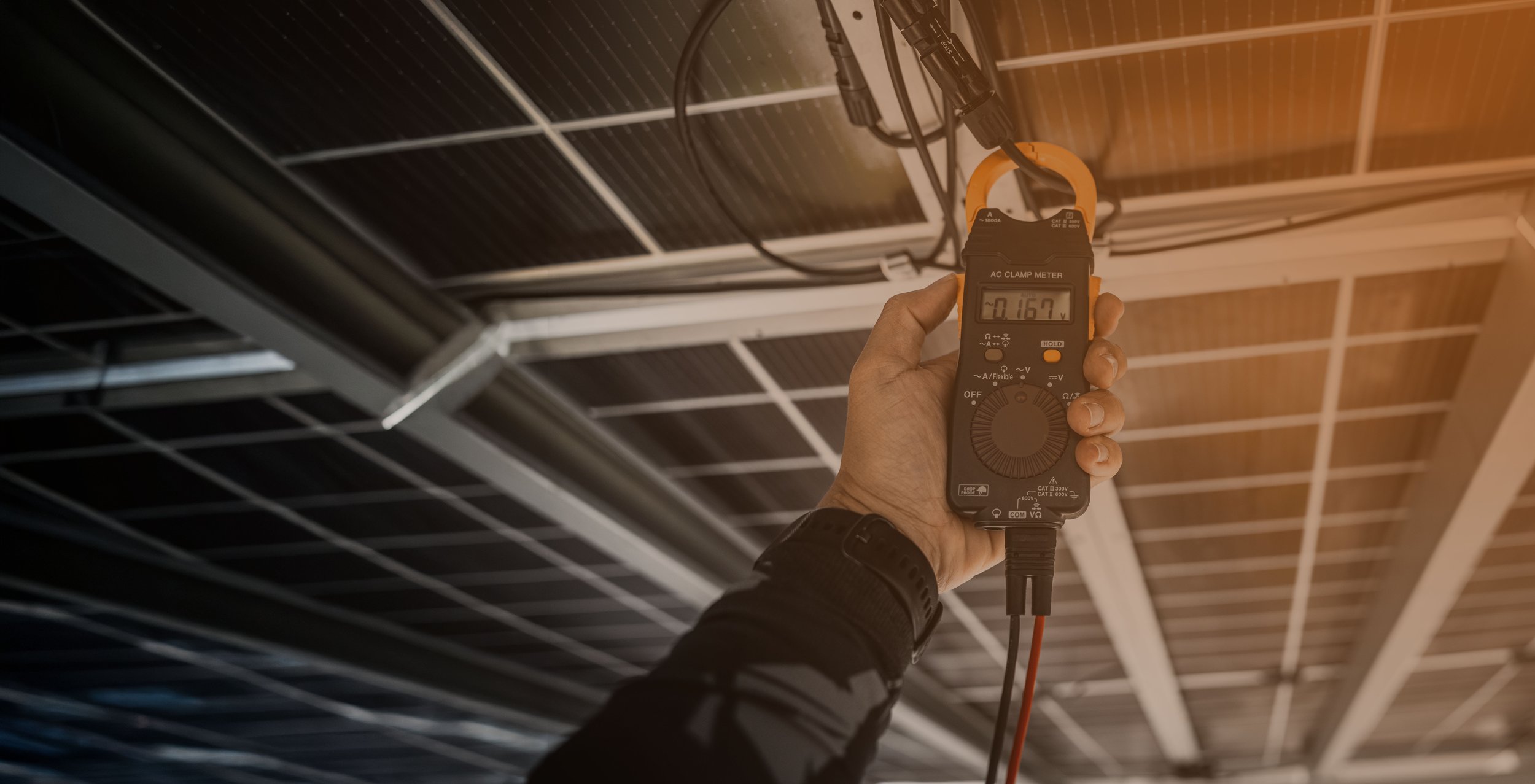
Every renewable and storage project reaches a moment where assumptions have to become evidence. Equipment arrives with factory certifications, installers sign off on terminations, and drawings say the system is built as designed, but none of that is proof. Acceptance testing is where Mission Control Energy converts installation into verified, documented, bankable fact. Our field teams perform electrical acceptance testing on the full scope of PV and BESS systems, from DC source circuits to the point of interconnection. Testing is executed to NETA ATS acceptance criteria and industry-standard test methods, with every result recorded against defined pass/fail thresholds, not judgment calls in the field. When a test report leaves our hands, it stands up to review by owners, independent engineers, and lenders alike.
Our Testing Scope Includes:
DC Circuit Verification
Continuity, polarity, insulation resistance, and string-level open-circuit voltage and short-circuit current confirmation
IV Curve Tracing
Module and string-level performance characterization that identifies underperformance, mismatch, and installation defects invisible to basic testing
Medium-Voltage Cable Testing
Insulation resistance and VLF/hipot testing on collection circuits before they're buried under warranty disputes
Transformer Testing
Turns ratio, winding resistance, insulation power factor, and oil analysis to ASTM standards
Protective Relay & Breaker System
Verifying settings, trip functions, and coordination match the approved protection study
Ground System Verification
Ground resistance and continuity testing across the array and substation
Thermographic Inspection
IR scanning of terminations, combiners, and switchgear under load to catch thermal defects before they become outage events
WHY THIS MATTERS
Defects found during testing cost hours. Defects found after energization cost outages, warranty fights, and retrofit mobilizations. Independent testing is the least expensive insurance a project will ever buy, and the documentation it produces is the foundation of every warranty claim, performance guarantee, and financing milestone that follows.
Schedule pressure doesn't have to mean testing shortcuts. Talk to MCE about building acceptance testing into your project plan, not bolting it on at the end.